Most amateur films feel like filmed stage plays. They are burdened by heavy-handed exposition, characters who narrate their feelings, and a camera that sits passively as a silent observer. If you’ve ever felt that your projects lack that “cinematic” spark—that visceral power that separates a home movie from a masterpiece—you are likely suffering from the “Telling” disease.
In the world of professional filmmaking, dialogue is a tool of last resort. The true language of cinema is light, shadow, composition, and rhythm. To move from an aspiring creator to a master filmmaker, you must learn to externalize the internal.
This is the ultimate Show Don’t Tell: Visual Storytelling Masterclass. We are going to shatter the myths of traditional screenwriting and dive deep into the technical, psychological, and artistic workflow of visual-first filmmaking.
Key Takeaways
- The 2+2 Rule: Learn why making the audience work for the answer is the secret to engagement.
- The Full-Stack Approach: Why “Show, Don’t Tell” applies to the lens, the lights, and the edit—not just the script.
- Technical Narrative: How specific focal lengths and blocking choices “show” a character’s mental state.
- The Mute Test: A professional workflow to ensure your story is told through images, not just words.
Table of Contents
- The Psychology of the “Show”: Why Our Brains Crave Subtext
- Phase 1: The Script – Externalizing the Internal
- Phase 2: The Camera – Telling the Story Through the Lens
- Phase 3: The Mise-en-Scène – The Silent Storytellers
- Phase 4: The Edit & Sound – The Final Layer of Showing
- 10 Pro Techniques to Master “Show, Don’t Tell”
- Insider Tips from the Set (Cinemastery Exclusive)
- When to Break the Rule: The Art of “Telling”
- Frequently Asked Questions (FAQ)
The Psychology of the “Show”: Why Our Brains Crave Subtext
The greatest cinematic experiences aren’t handed to the audience on a silver platter; they are discovered. Andrew Stanton, the visionary behind Wall-E and Toy Story, often cites the “2+2 Rule.” He argues that you should never give the audience the number “4.” Instead, give them “2+2” and let them solve it.
The Dopamine of Discovery
When an audience member connects two visual clues to understand a character’s motivation, their brain releases dopamine. They feel smart. They feel involved. This is visual subtext. The moment a character says, “I am so lonely,” that connection is severed. You have robbed the audience of the joy of discovery.
Active vs. Passive Viewing
Exposition—the act of explaining the plot through dialogue—turns the audience into passive recipients. Visual storytelling forces them to become active participants. In a masterclass-level production, the goal is to create a “visual puzzle” where the pieces are emotions, shadows, and objects. If you want to capture the “visceral power” of the medium, you must respect the audience’s intelligence.
Phase 1: The Script – Externalizing the Internal
The script is where “Show, Don’t Tell” is born, but it is often where it dies. Most writers use screenplay action lines as a bridge between dialogue scenes, rather than the primary vehicle for the narrative.
The “Dialogue Audit”
A sacred workflow used by top-tier directors involves the “Dialogue Audit.” Take your script and highlight every line of dialogue that explains how a character feels or provides backstory. Now, delete them.
How can you show that “John is grieving” without him saying “I miss my wife”?
- Showing: John sets two plates for dinner, stares at the empty chair across from him, and then slowly scrapes the food from the second plate into the trash.
Character Introductions: The “Sherlock Holmes” Method
First impressions are everything. Don’t tell us a character is a “disorganized genius.” Show us their desk. This is the semiotics of film—using signs and symbols to communicate complex traits.
Case Study: Look at the opening of A Quiet Place. The film features almost no dialogue, yet we understand the stakes, the family dynamics, and the “rules” of the world within the first ten minutes. It is a masterclass in externalizing internal conflict.
Phase 2: The Camera – Telling the Story Through the Lens
Cinematography is not just about “pretty pictures.” It is the art of cinematic exposition. Every choice a Director of Photography (DP) makes should “show” a narrative truth.
Lens Choice as Narrative
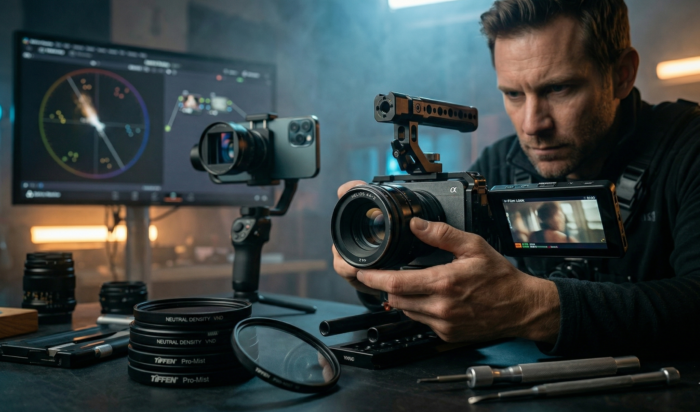
The glass you put in front of the sensor is your most potent storytelling tool.
- Wide Lenses (14mm to 24mm): These are for “Environmental Telling.” By showing a character as a small speck in a vast landscape, you show their insignificance or their isolation.
- Long Lenses (85mm to 200mm): These are for “Emotional Showing.” Long lenses compress space and blur the background, forcing the audience to focus solely on the character’s internal world.
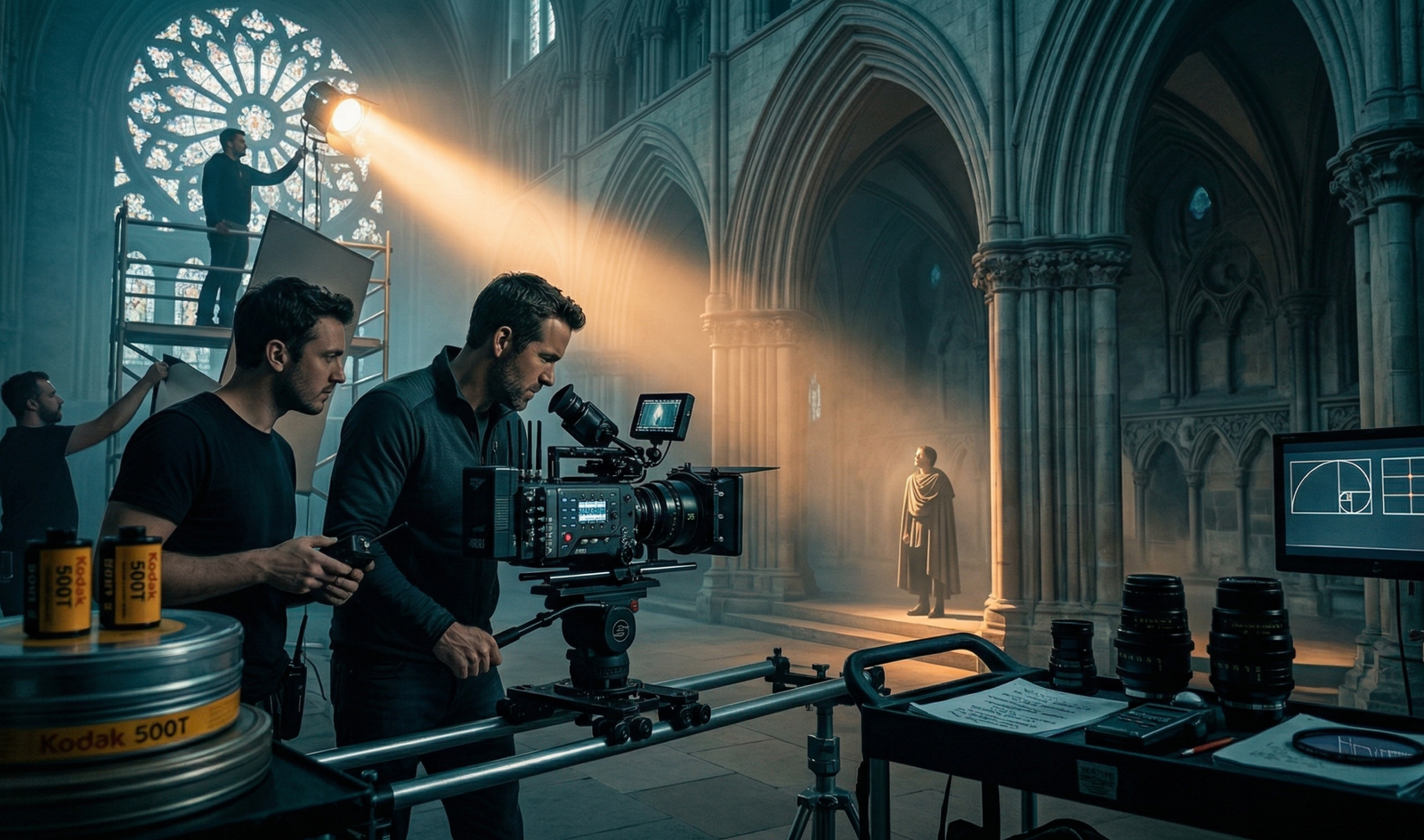
Using equipment from industry leaders like ARRI or RED Digital Cinema allows for a level of dynamic range that can “show” detail in the shadows, representing the “hidden” parts of a character’s psyche.
The Power of Blocking
Camera blocking for narrative is the physical arrangement of actors in a space.
- If a character is losing power in a scene, the camera should slowly move to a high angle, looking down on them.
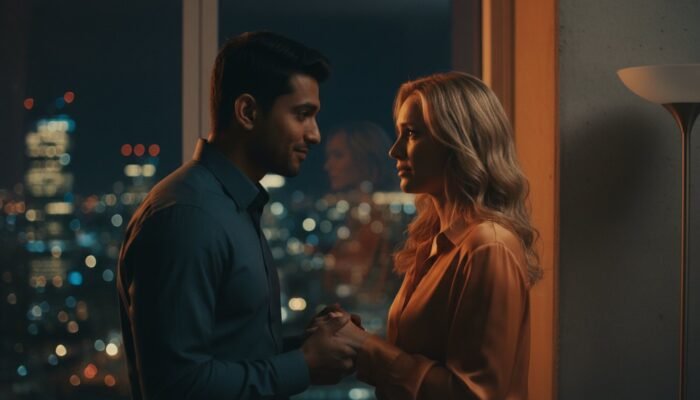
- If two characters are in conflict, place a physical barrier (a pillar, a wall, a window frame) between them in the composition to show their emotional distance.
Phase 3: The Mise-en-Scène – The Silent Storytellers
Everything within the frame—the “Mise-en-Scène”—is an opportunity to “show.”
Production Design & “Character Mess”
A character’s environment is a map of their mind. In Fight Club, the protagonist’s pristine IKEA-filled apartment “shows” his empty, consumerist soul before a single word is spoken. Production design storytelling uses the “patina” of a room—the dust, the clutter, the sterile cleanliness—to communicate history.
Color Theory: The Visual Metaphor
Color is a direct line to the human subconscious.
- The Sixth Sense: M. Night Shyamalan used the color red to “show” when the world of the living and the world of the dead intersected.
- Kodak’s Legacy: The history of film stocks, often archived by Kodak, shows how different color palettes evoke specific eras and emotional weights.
Costume Design: The Armor
A character’s clothing should evolve with their arc. A character who starts the film in a buttoned-up, tight suit (showing repression) might end the film in loose, tattered clothing (showing liberation or breakdown). This is visual character development at its finest.
Phase 4: The Edit & Sound – The Final Layer of Showing
The edit is where you control the “eye” of the audience. It is the final opportunity to apply the “Show, Don’t Tell” principle.
The Kuleshov Effect
Named after Soviet filmmaker Lev Kuleshov, this effect proves that the audience derives more meaning from the interaction of two shots than from a single shot in isolation.
- Shot A: A man with a neutral expression.
- Shot B: A bowl of soup.
- Result: The audience thinks the man is hungry.
This is the ultimate way to “show” emotion without an actor having to overplay it.
Soundscapes: Showing the Invisible
Sound can “show” what the camera cannot afford or chooses not to see. The sound of a distant siren “shows” an urban environment of danger. The buzzing of a single fly in a room “shows” stagnation or death. In professional sound design, silence is often the loudest way to “show” a character’s shock.
10 Pro Techniques to Master “Show, Don’t Tell”
To move beyond the basics, integrate these technical maneuvers into your next production:
- The Silent Take: After a scene with dialogue, have the actors play the scene again with zero words. Often, the “look” they give each other is more powerful than the script.
- The Object Motif: Introduce a recurring prop (a broken watch, a coin, a photograph) that changes state as the character changes.
- The Weather Mirror (Pathetic Fallacy): Use the environment (fog for confusion, rain for grief, harsh sun for exposure) to “show” the internal mood.
- Information Delay: Show the reaction to an event before you show the event itself. This builds instant tension.
- Reaction vs. Action: In the edit, stay on the person listening rather than the person talking. The listener’s face is where the emotion is “shown.”
- Framing for Entrapment: Use “frames within frames” (doorways, windows, banisters) to visually trap a character who feels stuck in their life.
- The First Frame Identity: Introduce your protagonist through a close-up of their hands or their shoes. What they do (e.g., nervously biting nails) shows who they are.
- Lighting as Emotional Barometer: Use a “chiaroscuro” (high contrast) lighting setup to show a character torn between two moral choices.
- The “Prop Swap”: Replace a page of dialogue with a physical action. Instead of “I’m leaving you,” show the character placing their wedding ring on the nightstand.
- Symmetry vs. Chaos: Use perfectly centered, symmetrical shots to show a character’s need for control, then break that symmetry when their life falls apart.
Insider Tips from the Set (Cinemastery Exclusive)
At the professional level, visual storytelling is a discipline of restraint. Here are three “secrets” from the Cinemastery vault:
- The “Mute Test”: Watch your first assembly (the “rough cut”) with the speakers turned off. If you can’t follow the emotional arc of the story purely through the images, your visual language is failing. Go back to the edit and find ways to “show” the missing information.
- Directing for Visual Performance: Avoid giving “result-oriented” notes like “be sad.” Instead, give a physical task. Tell the actor: “Try to hide the fact that you’ve been crying from the person you’re talking to.” This creates a “visual mask” that the audience will love to peer behind.
- The Narrative Gear Shift: Use your camera movement to “show” a shift in the scene’s power. Start the scene on a tripod (stability) and move to a handheld “shaky cam” (instability) the moment the conflict erupts.
When to Break the Rule: The Art of “Telling”
Is “telling” always a sin? No. Even masters like Quentin Tarantino and Aaron Sorkin use dialogue-heavy “telling.”
Efficiency and Pacing
Sometimes, a 5-second line of dialogue like “The bridge is out” saves you 10 minutes of visual filler. Use “telling” for logistical information so you can save your “showing” for the emotional peaks.
Stylistic Telling
In films like The Wolf of Wall Street, the protagonist speaks directly to the camera. This is “telling” as a stylistic choice to show the character’s narcissism. Breaking the fourth wall is a visual way of “telling” that creates a unique bond with the audience.
Conclusion: Elevating Your Visual Literacy
Mastering the “Show Don’t Tell” philosophy is not about following a rigid set of rules; it is about developing a visual literacy. It is about understanding that cinema is the only medium that allows us to inhabit another person’s perspective through the sheer power of light and sound.
When you stop narrating and start “showing,” you stop making videos and start making films. You move from being a storyteller to being a “visionary.”
Start your journey at Cinemastery Academy. If you are tired of the same “Writing 101” advice and are ready to learn the “sacred workflow” of professional directors and DPs, our program is designed for you. We don’t just teach you how to use a camera; we teach you how to use it as a weapon of emotional impact.
Frequently Asked Questions (FAQ)
Q: Can you have dialogue in “Show, Don’t Tell”?
A: Absolutely. Dialogue is fine as long as it isn’t “on the nose.” If the dialogue serves as an action (e.g., a character lying to get what they want), it is actually a form of showing the character’s deceptive nature.
Q: Is “Show, Don’t Tell” only for screenwriters?
A: No, it is the primary job of the Director, DP, and Editor. A screenwriter provides the blueprint, but the visual execution is what truly “shows” the story to the audience.
Q: How do I practice visual storytelling without a budget?
A: Practice street photography. Try to tell a complete story with a single, unposed frame. Additionally, watch silent films from the 1920s; they are the purest examples of narrative “showing” ever created.
Q: What is a “visual metaphor”?
A: A visual metaphor is using an image to represent an idea. For example, showing a wilting flower in a vase to represent a dying relationship. It is a way to communicate deep themes without a single word of exposition.
Q: Why is exposition considered bad in filmmaking?
A: Exposition isn’t inherently bad, but “lazy exposition” (characters talking about things they both already know just for the benefit of the audience) breaks the immersion and makes the world feel fake.