
THE CINEMASTERY JOURNAL
How to Create Symbolic Imagery in Modern Cinematic Storytelling
13 June 2026 · 19 min read
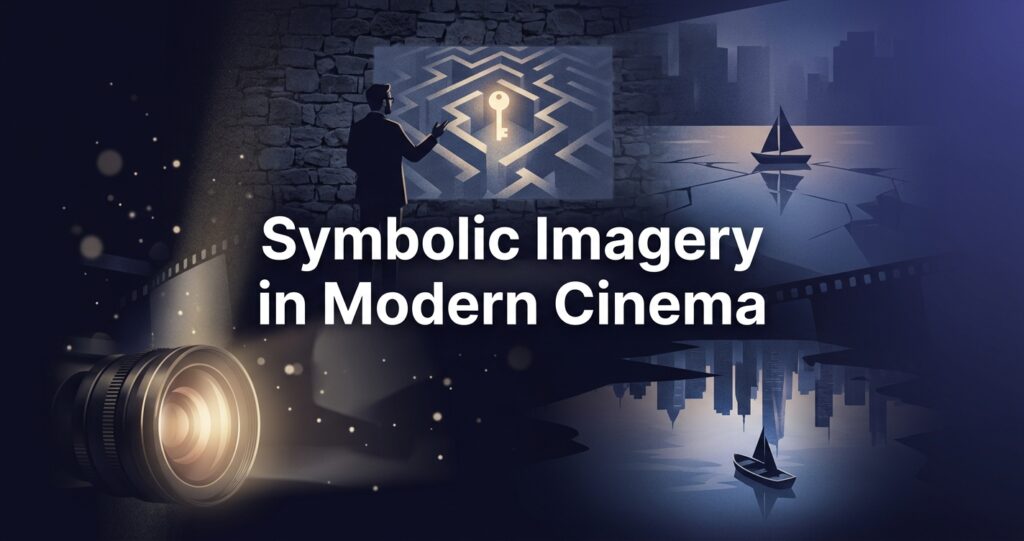
Learning how to create symbolic imagery in modern cinematic storytelling is one of the most demanding and rewarding skills a filmmaker can develop. Research shows that blink rate patterns in viewers serve as a reliable quantitative measure of individual engagement with scene content, meaning the visual events you design are registering in your audience’s nervous system in measurable, real ways. This is not decoration. Symbolic imagery is a structural language, and when you build it with precision, you give your film a second grammar that speaks beneath the dialogue and plot.
Key Takeaways
- Symbolic imagery is a system, not an accident. Every recurring visual element must be planned from the script stage with a clear thematic purpose attached to it.
- Repetition is the mechanism that converts image into symbol. A visual only becomes symbolic when audiences encounter it multiple times in contextually meaningful situations across the film.
- Color, shape, composition, scale, and props are all carriers of symbolic meaning. You do not need just one layer; the most powerful films stack several simultaneously.
- Your editing timeline is where symbolic imagery is either reinforced or destroyed. Cut placement, visual similarity across cuts, and scale transitions all affect whether audiences register your motifs consciously or subconsciously.
- Symbolism in cinema operates on at least two levels. The surface level (what the audience notices) and the subconscious level (what they feel without articulating) must both be accounted for in your visual design.
- Serious filmmakers treat visual language like screenwriters treat dialogue: every word (every frame element) is either load-bearing or it should be cut. Explore the Becoming an Auteur Level 3 track to go deeper into this discipline.
- Testing your symbolic system before picture lock is critical. Audience blink-rate data, gaze studies, and structured feedback all give measurable confirmation that your motifs are landing as intended.
Understanding Symbolic Imagery in Modern Cinematic Storytelling
Before you can learn how to create symbolic imagery in modern cinematic storytelling, you have to understand what symbolic imagery actually is at a technical and structural level. It is not simply a meaningful object placed in frame. It is a visual element that accumulates meaning through controlled, repeated exposure within the narrative context.
A candle in one scene is a prop. A candle that appears in the opening scene during a character’s hope, reappears as it flickers during their doubt, and is extinguished at the moment of their defeat is a symbol. The difference is entirely structural.
In 2026, the most sophisticated films operating in international cinema build their symbolic systems long before a single frame is shot. They emerge from the screenplay as planned visual motifs, are assigned to a production designer and cinematographer with explicit thematic briefs, and are tracked in editing continuity documents the same way dialogue revisions are tracked.
This is the level of intentionality we are discussing. If you want to create symbolic imagery in cinematic storytelling that genuinely functions, you need to treat it as architecture, not inspiration.
How to Build a Visual Language Through Repetition and Motif
A visual language is a set of recurring visual elements that together create a coherent grammar of meaning across your film. Building one requires three foundational decisions made at the development stage:
- Select your carrier elements. Choose the specific visual vehicles for your symbolism: color palette, object, spatial composition, lighting temperature, camera distance, or a combination.
- Assign thematic values. Each carrier element must map directly to a theme, emotional state, or character arc. Write this mapping out. It must be explicit.
- Plan your appearances across the three-act structure. Map when each symbolic element appears, in what context, and how its meaning shifts as the narrative develops. Symbolic imagery in cinematic storytelling must evolve, not just repeat flatly.
Repetition is the engine here. A motif without repetition is a single image. Repetition with context variation is what transforms a visual into a cinematic symbol. The audience does not need to consciously recognize the pattern. Their nervous system will register it regardless, and that is precisely the point.
Consider how directors working in the auteur tradition approach this: the recurring visual motif becomes the film’s subconscious voice. If you are working toward that level of filmmaking, the structured path through an advanced filmmaking curriculum can help you develop this intentionality systematically rather than accidentally.
A concise, visual guide to building symbolic imagery in modern cinema, outlined as a practical five-step framework. This infographic helps writers and directors infuse meaning through visual motifs.
How to Create Symbolic Imagery Using Color as a Recurring Signal
Color is the most instinctive and the most abused tool in symbolic imagery. The risk is always the same: filmmakers select a color association (green equals corruption, blue equals grief, red equals danger) and then apply it so bluntly that it reads as a visual annotation rather than a cinematic language.
The advanced approach to color-based symbolic imagery works differently. Here is how to create symbolic imagery in cinematic storytelling using color with genuine depth:
- Start with a dominant color world for your protagonist’s subjective reality. This is the baseline. Everything feels “normal” in this palette.
- Introduce a second, contaminating color at the first thematic turning point. This is not an abrupt shift. It bleeds in at the edges, in backgrounds, in peripheral objects.
- Let the contaminating color grow in prominence as the character’s world changes. By the third act, the proportion of each color in any given frame should tell the story without a single line of dialogue.
- Reserve pure, uncontaminated versions of your original palette for memory, flashback, or moments of clarity. This creates a color-based emotional time signature.
The key is that you design the arc of the color, not just the association. Color as symbolic imagery in cinematic storytelling must have a trajectory, not just a meaning.
Shape, Composition, and Geometric Motifs in Cinematic Storytelling
Shape-based symbolic imagery is among the least discussed and most powerful tools available to a filmmaker. While color is relatively overt, geometric repetition operates almost entirely below the threshold of conscious recognition for most viewers, yet it registers with considerable force on the emotional and cognitive level.
Here is a working framework for using shape and composition as recurring motifs:
Frame-Within-a-Frame as Containment Symbol
When a character is consistently framed through doorways, windows, mirrors, or archways during the first act, and this compositional choice dissolves in the third act, you create a visual liberation arc without a word of exposition. The frame-within-a-frame motif is a confinement symbol that audience members feel as a release even if they could not name what changed.
Diagonal vs. Horizontal Composition
Assigning diagonal compositions to scenes of instability, conflict, or transition, and returning to horizontal compositions during moments of resolution or stasis, gives you a geometric emotional register. When these compositions appear consistently in your symbolic imagery, they begin to cue audience expectation before the scene’s content confirms it.
Negative Space and Power
The amount of negative space surrounding a character in frame can function as a recurring motif tied to their agency, isolation, or dominance. Track this across your film intentionally. A protagonist who begins surrounded by empty space (isolation, vulnerability) and ends in tightly composed frames with other characters (belonging, connection) has undergone a spatial symbolic arc.
This level of compositional planning is part of what separates a functional film from an authored one. The Becoming an Auteur course addresses exactly this kind of total-authorship thinking for filmmakers ready to work at that scale.
How to Create Symbolic Imagery Through Object Placement and Props
Prop-based symbolic imagery has one of the longest histories in cinema, and also one of the highest rates of misuse. A symbolic object becomes a cliche the moment it is handled with too much narrative emphasis. Actors should not stare meaningfully at symbols. Directors should not cut to close-ups of symbols with swelling music. The symbol must do its work quietly, or it will not work at all.
Here is the advanced discipline for prop-based symbolic imagery in cinematic storytelling:
The Rule of Unnoticed Presence
Your symbolic prop should be visible but not foregrounded on its first and second appearance. Place it in the background, on a shelf, in someone’s peripheral space. Let the audience’s subconscious register it without their conscious attention locking onto it. By the third appearance, you can bring it slightly forward. By the final appearance, it can occupy the foreground, but only because the audience has been primed without knowing it.
The Transfer of Object Ownership
Symbolic objects gain tremendous power when they change hands between characters. The object’s meaning evolves with each new owner. A watch passed from father to son carries the accumulated weight of every scene in which it appeared. Design the object’s journey through the film the way you design a character’s journey: with intention, consequence, and transformation.
Destruction and Absence as Culminating Symbol
The most resonant moments in prop-based symbolic imagery are often not when the object appears, but when it is destroyed, lost, or conspicuously absent. If you have built the object’s symbolic weight correctly across the film, its absence in a key scene will register as a loss at the same depth as a character death.
How to Integrate Symbolic Imagery Across Your Editing Timeline
The editing room is where symbolic imagery in cinematic storytelling either consolidates or collapses. Even a perfectly designed symbolic system can be undermined by editing choices that fragment the repetition or dilute the visual grammar you built in production.
Here are the core editorial disciplines for symbolic imagery:
- Create a symbolic motif cut list. Before you begin your first assembly, mark every frame in your footage that contains your symbolic elements. Treat these moments the way you treat your character’s arc beats: as structural requirements, not optional inclusions.
- Maintain compositional consistency across appearances. If your symbolic element always appears in the lower left of frame on its first two appearances, do not suddenly place it centrally on its third unless that shift is itself the symbolic statement.
- Use visual similarity across cuts to anchor attention. Research on continuity editing confirms that repeating visual features (position, color, scale) across the cut guides viewer attention even during cuts that would otherwise disrupt perception. Use this deliberately: if your symbol appears just before a cut, carry a visual echo of it into the first frame of the following shot.
- Time symbolic appearances to narrative beats, not random distribution. Your symbolic imagery should appear at each major narrative turning point. Its appearance creates a visual underlining of the thematic content being activated at that moment in the story.
Editing for symbolic imagery requires a kind of double-consciousness: you are simultaneously cutting for pace and performance, and cutting to maintain the integrity of a parallel visual language. It is difficult. It is also one of the most defining skills of serious filmmakers. Exploring the full range of filmmaking courses available through structured learning can help you develop this kind of dual-layered editorial thinking.
Building a Visual Grammar: How Repetition Locks In Meaning
The phrase “visual grammar” is used loosely in filmmaking discussions. We use it here with specificity: a visual grammar is a set of repeating visual rules that an audience learns to read, consciously or not, across the runtime of a film.
To build one, you need to understand how repetition functions at a cognitive level. Audiences learn visual grammar the same way they learn spoken language patterns: through exposure, context, and consequence. The first time a visual rule appears, it is a choice. The second time, it is a pattern. The third time, it is a grammar rule that carries expectation and meaning.
Designing the Three-Appearance Rule
No symbolic element becomes grammatical in fewer than three appearances in different contexts. One appearance is a visual moment. Two appearances is a possible coincidence. Three appearances in three meaningfully different narrative contexts is a grammar rule. From the third appearance forward, you can begin to subvert, complicate, or invert the rule, and that subversion carries emotional weight proportional to how clearly the rule was established.
Subversion as the Highest Form of Symbolic Imagery
Once your visual grammar is established, breaking it deliberately becomes one of the most powerful tools available. If your protagonist is always seen in warm light during scenes of safety, and then you place them in warm light during the scene where they make their most catastrophic mistake, you create a profound cognitive dissonance. The grammar tells the audience “this is safe.” The narrative says otherwise. That tension is where symbolic imagery in cinematic storytelling reaches its deepest impact.
How to Create Symbolic Imagery That Operates on Multiple Levels
The most durable symbolic imagery in cinematic history works on at least two simultaneous levels: a surface level that any attentive viewer will register, and a deeper structural level that rewards re-watching and close analysis.
Designing symbolic imagery to operate on multiple levels is not an act of self-indulgence. It is what separates films that exist for a season from films that persist in culture for decades. Here is how to approach it deliberately.
Level One: The Surface Symbol
This is the visible, accessible layer. A recurring object, a color associated with danger, a compositional motif tied to power. This layer should be legible to any engaged viewer on a first watch without explanation. If it requires explanation, it has failed as surface-level symbolic imagery.
Level Two: The Structural Symbol
This layer operates through the pattern of appearances rather than any single appearance. It requires viewers to hold the entire film in memory simultaneously to perceive it fully. The structural symbol often only becomes visible on a second or third viewing, when the audience knows the film’s outcome and can see how the visual grammar was constructed in hindsight.
Level Three: The Thematic Argument
At the deepest level, your symbolic imagery is making a philosophical argument about the film’s subject. The best symbolic systems in cinematic storytelling do not merely illustrate theme; they enact it. The structure of the motif is itself a statement about the thematic content. Designing at this level requires a filmmaker who has a clear, articulate point of view about their subject matter and is willing to embed it in every compositional choice across the film.
This is the domain of auteur filmmaking. If you are ready to develop this level of intentionality, the structured progression from foundational skills through the basics of filmmaking toward advanced practice is the most reliable path forward.
Testing and Refining Your Symbolic System
Symbolic imagery in cinematic storytelling is not complete until it has been tested against actual viewers. This is a step many filmmakers skip, treating their symbolic system as a private matter between themselves and the film. That is a significant error.
Your symbolic system exists in the relationship between the film and the viewer. If viewers are not registering the motifs as intended, the system has failed regardless of how elegantly it was designed. Testing is not a compromise of artistic vision; it is the final discipline of a rigorous symbolic practice.
Structured Test Screening Protocols for Symbolic Imagery
Conventional test screenings ask audiences to rate enjoyment and comprehension. For symbolic imagery, you need more targeted questions. After your screening, ask your test audience:
- What images stuck with you after the film ended? (Unprompted recall reveals which symbolic elements penetrated.)
- Were there any images or objects that kept appearing? Did you notice any patterns in them? (This surfaces conscious symbolic recognition.)
- Without explaining the film’s theme, can you describe what the film felt like it was “about” beneath the plot? (This tests whether the symbolic system successfully communicates your thematic argument.)
Gaze-Based and Blink-Rate Testing
In 2026, serious filmmakers with access to university research partnerships or professional post-production labs can use gaze-tracking and blink-rate monitoring to test symbolic imagery empirically. Research confirms that viewer gaze behavior after cuts is under cognitive control: when viewers are oriented toward meaningful visual events, gaze patterns shift consistently and measurably. If your symbolic imagery is functioning, you should see attention-concentration effects at the moments of symbolic appearance.
The Revision Protocol
After testing, be prepared to make structural revisions, not cosmetic ones. If a symbolic element is not registering, the solution is rarely to make it more obvious in a single scene. It is more often to add an earlier appearance, or to ensure the contextual narrative stakes around the symbol are more clearly established before the symbol appears. The fix is almost always architectural.
Developing the discipline to work this way across an entire career is what complete filmmaker development programs are designed to build, from foundational visual storytelling skills through to the authorial practice of working at scale.
Conclusion
Learning how to create symbolic imagery in modern cinematic storytelling is, at its core, learning to speak in two languages simultaneously. The first language is plot, dialogue, and performance. The second is the visual grammar of motif, repetition, and thematic argument built into every frame decision across the film.
The serious filmmaker does not leave symbolic imagery to inspiration or accident. They plan it at script stage, brief it to collaborators in production, protect it in the editing room, and test it against audiences before lock. They treat it with the same rigor they would apply to any other structural element of their film because it is structural. It is not decoration. It is architecture.
The techniques covered here, from color trajectory and geometric motif to prop transfer and editorial continuity, are the working methods of filmmakers who understand that cinematic storytelling is a visual language first and a narrative one second. Building your fluency in that visual language, through practice, study, and structured guidance, is the work of a serious filmmaker’s career.
If you are ready to develop this practice at depth, explore the full curriculum at Cinemastery Academy, where the progression from foundational skills through to auteur-level filmmaking practice is designed for exactly this level of serious engagement with the craft.
Frequently Asked Questions
What is symbolic imagery in cinematic storytelling and how does it differ from visual metaphor?
Symbolic imagery in cinematic storytelling refers to visual elements that accumulate meaning through repeated, intentional appearances across a film’s narrative. A visual metaphor is typically a single comparison made in one scene, while symbolic imagery creates a grammar of meaning through structured repetition and contextual variation across the entire runtime.
How many times does a visual element need to appear before it becomes a true cinematic symbol?
A visual element needs a minimum of three appearances in meaningfully different narrative contexts to function as genuine symbolic imagery in cinematic storytelling. One appearance is a visual moment, two is a possible pattern, and three creates an established grammar rule that audiences internalize consciously or subconsciously.
How do I create symbolic imagery in my film without making it feel obvious or heavy-handed?
The key to creating symbolic imagery that feels organic rather than forced is to introduce it at low narrative prominence and let it grow. Place your symbolic elements in background positions or peripheral spaces on first appearances, bring them forward gradually, and never emphasize them with musical swells or lingering close-ups in early scenes. The symbol should earn its foreground position through accumulated context.
Can color alone carry an entire symbolic imagery system in a feature film?
Color can carry a complete symbolic imagery system in cinematic storytelling, but it works most powerfully when it has a designed arc rather than a fixed association. Rather than assigning one color to one meaning, build a color trajectory where the ratio, saturation, and dominance of specific palettes shifts as the narrative and thematic content evolves. Flat color symbolism reads as annotation; dynamic color arcs read as genuine visual language.
How do I use editing to reinforce symbolic imagery rather than accidentally undermining it?
Create a symbolic motif cut list before your first assembly and treat every appearance of your symbolic elements as a structural editorial requirement, not an optional inclusion. Use visual similarity across cuts to anchor audience attention toward your motifs, and time symbolic appearances to land at major narrative turning points rather than distributing them randomly across the timeline.
Is it worth studying auteur cinema specifically to learn symbolic imagery techniques in 2026?
Yes, studying auteur cinema in 2026 remains one of the most direct paths to understanding how symbolic imagery in cinematic storytelling functions at a high level. Auteur films are especially useful study material because the symbolic system is typically total, meaning every visual choice is part of an integrated language rather than an isolated decision. Structured study of auteur filmmaking methods, combined with formal development through courses like the advanced filmmaking program, provides the most rigorous foundation.
How do I test whether my symbolic imagery system is working before I lock picture?
Run structured test screenings with questions designed to surface symbolic recognition: ask audiences what images stayed with them after the film, whether they noticed any repeating visual patterns, and what the film felt like it was “about” beneath the surface plot. Unprompted recall of your symbolic elements confirms penetration, while thematic articulation without cuing confirms that your visual grammar is successfully communicating your intended argument.