You are exhausted. You have bought the heavy, expensive 8K cinema cameras. You have mounted the clinically sharp, multi-coated lenses. You have spent countless, eye-straining hours in dark rooms, tweaking nodes and applying infinite layers of emulation LUTs to your footage. Yet, when you finally project your masterpiece, a sinking feeling washes over you. The image feels empty. It lacks soul. It looks like every other piece of disposable, plastic, algorithm-pleasing content currently suffocating the internet.
As an aspiring filmmaker, you are rightfully frustrated with mediocrity. The modern digital cinema landscape has sold you a convenient lie: that infinite resolution and clinical perfection equate to profound emotional resonance. But true cinema is not about counting pixels; it is about capturing feeling. It is time to shatter the myths that have kept you trapped in this sterile, digital purgatory. The secret to breaking free isn’t found in another firmware update or a more expensive hard drive. It is found in a return to the visceral power of photochemistry.
Welcome to the revelation. Welcome to the timeless, unapologetic, and fiercely beautiful world of 16mm film.
Key Takeaways
- 16mm film offers an unparalleled, organic aesthetic: The natural grain structure, halation, and color rendition of film create a deeply emotional texture that digital sensors can only poorly mimic.
- Embracing the sacred workflow: Shooting film forces a strict discipline upon the filmmaker, demanding deliberate choices, meticulous rehearsal, and intentional artistry rather than the lazy “fix it in post” mentality.
- Modern film stocks are technical marvels: Today’s emulsions provide an astonishing dynamic range, retaining highlight information in ways that make digital clipping look entirely obsolete.
- Legendary mechanical cameras: Mastering iconic 16mm cameras like the Arriflex 16SR, Aaton XTR, and Bolex is a true rite of passage that connects you to the greatest cinematic masters of the past century.
- Film is an accessible reality: Despite the rumors, shooting 16mm is not exclusively for the Hollywood elite. With the right budgeting and shooting ratios, it is a highly viable tool for independent visionaries to stand out from the crowd.
Table of Contents
- The Soul of Cinema: Why 16mm Film Defies the Digital Age
- A Brief History: From Amateur Toys to Indie Masterpieces
- The Sacred Workflow: Discipline Over Convenience
- Choosing Your Weapon: Legendary 16mm Cameras
- Decoding Film Stocks: The Kodak Vision3 Era
- Shatter the Myths: Is 16mm Too Expensive?
- Conclusion
- Frequently Asked Questions
The Soul of Cinema: Why 16mm Film Defies the Digital Age
We are living through an era of technological gluttony where camera manufacturers wage war over specifications that the human eye cannot even perceive. Digital cinema cameras are fundamentally data-gathering machines. They operate on a binary system of ones and zeros, capturing light on a rigid, mathematical grid of pixels. While this yields undeniably sharp and clean images, it also strips the image of its inherent humanity. The digital image is a literal, unforgiving translation of reality.
Film does not replicate reality; it interprets it.
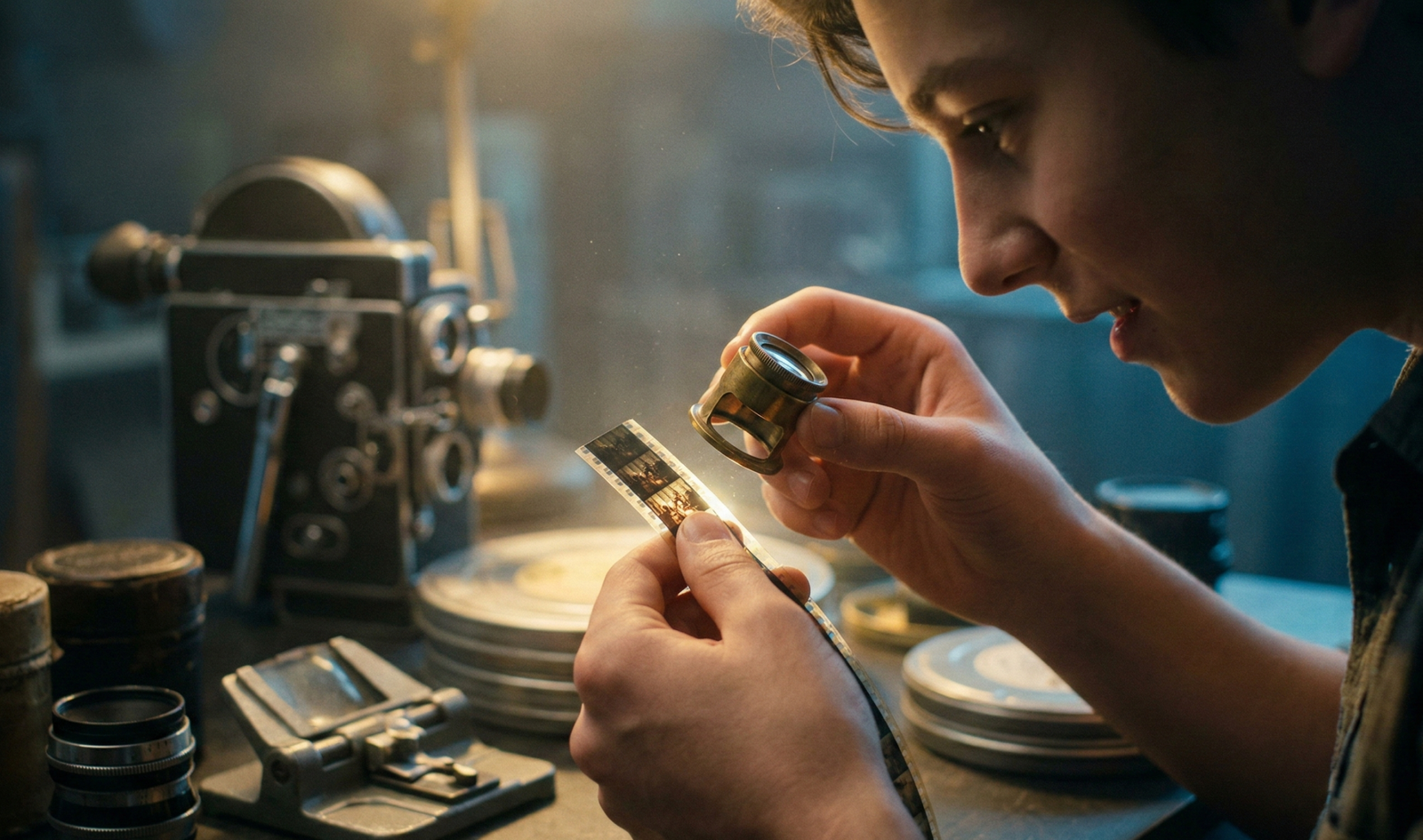
When you expose a frame of 16mm film, light physically alters microscopic silver halide crystals suspended in a gelatin emulsion. This is not a digital approximation; it is an organic, photochemical reaction. Because these crystals are scattered randomly across the film strip, the “grain” changes with every single frame. This constant, microscopic shifting creates a subliminal vibration in the image—a phenomenon that breathes life into the moving picture.
Aspiring filmmakers often confuse grain with digital noise. This is a fatal misunderstanding. Digital noise is a byproduct of electronic failure—the sensor struggling to find information in the dark, resulting in ugly, blocky, multi-colored artifacts. Film grain, on the other hand, is the physical texture of the medium itself. It is the brushstroke on the canvas. It provides a foundational grit and a visceral power that anchors the audience in the world you have created.
Furthermore, 16mm film reacts to light in a way that feels fundamentally magical. When a bright light source—like a practical lamp or the sun—hits the emulsion, it scatters through the layers of the film, creating a soft, warm glow known as halation. Digital sensors, with their hard clipping points, handle overexposure with abrupt, unappealing harshness. Film gracefully rolls off into the highlights, protecting your brightest areas and preserving a painterly aesthetic that has defined over a century of cinematic mastery. Unlocking a secret like this fundamentally changes how you view light and shadow on set.
A Brief History: From Amateur Toys to Indie Masterpieces
To understand the magic of 16mm, you must understand its legacy. When Eastman Kodak introduced the format in 1923, it was not intended for the masters of cinema. It was born as a cheaper, non-flammable alternative to the highly combustible 35mm nitrate film used in Hollywood, marketed explicitly toward the amateur and educational markets.
However, true artists have a habit of taking consumer tools and elevating them into instruments of profound expression. As camera technology advanced, 16mm cameras became dramatically smaller, lighter, and more portable than their cumbersome 35mm counterparts. During World War II, combat cameramen utilized 16mm to capture the visceral, terrifying reality of the front lines. In the 1960s, the pioneers of the French New Wave and the American Cinéma Vérité movements realized that these lightweight cameras allowed them to escape the oppressive, highly controlled studio system. They could take their cameras onto the streets, shooting from the shoulder, capturing life with an intimacy that was previously impossible.
The format experienced a massive evolutionary leap in the late 1960s with the invention of Super 16mm. Swedish cinematographer Rune Ericson realized that by eliminating the space reserved for the optical soundtrack on a standard 16mm strip, he could expand the image area horizontally. This created a wider, more cinematic aspect ratio (1.66:1) that was far easier to blow up to 35mm for theatrical projection. This simple but brilliant modification turned 16mm into a legitimate, high-end feature film format, utilized in raw, groundbreaking indie masterpieces like The Texas Chain Saw Massacre, The Evil Dead, and Clerks.
Today, the format is experiencing a ferocious renaissance. Rather than dying out as prophesied by tech evangelists, 16mm is being championed by visionary directors who crave its distinctive look. This isn’t just a niche underground movement; major industry events have seen analogue showcases wowing industry veterans at modern expos, proving that the hunger for tactile, photochemical storytelling is stronger than ever. 16mm has survived because it offers an aesthetic that simply cannot be matched by silicon chips.
The Sacred Workflow: Discipline Over Convenience
If you want to step away from the crowd of amateur content creators and become a true filmmaker, you must change your relationship with the act of shooting. Digital cinema has birthed a culture of complacency. Because data is essentially free, directors will often “spray and pray,” rolling the camera endlessly, doing dozens of uninspired takes, and hoping to find the movie in the edit suite. This is the death of intentionality.
Shooting 16mm introduces what we call the sacred workflow. Every single time you press the run button on a film camera, physical stock is pulling through the gate. You are literally burning money at 24 frames per second. While this may sound terrifying to the uninitiated, it is, in fact, the greatest gift a filmmaker can receive. This cost enforces discipline.
Intentionality: The Cost of Pressing Record
When every second counts, you cannot afford to be lazy. You are forced to meticulously block your scenes. You must rehearse your actors until the performance is perfected before the camera rolls. You cannot rely on an EVF or a false-color monitor to save you; you must step onto the set, read the light with an analog light meter, understand the contrast ratios, and commit to an exposure. This level of intense focus elevates the energy of the entire crew. When the Assistant Camera calls “Speed,” a hush falls over the set. Everyone knows the stakes. The actors give their absolute best because they know they only have a few takes. This is where cinema is forged.
Loading the Magazine: A Tactile Ritual
The discipline extends to the camera department. Unlike swapping a memory card, changing a 400-foot magazine of 16mm film is a tactile, almost religious ritual. The camera loader must place their hands into a pitch-black changing tent, relying entirely on touch to unseal the unexposed film, thread it through the magazine’s intricate rollers, and secure it, all without exposing a single inch to the light. It connects you physically to the medium in a way that a plastic SD card never will.
Processing and Scanning: The Alchemy of the Lab
Once the film is shot, the magic continues in the dark. The exposed negative must be sent to a motion picture film lab, where it undergoes a highly controlled chemical bath. This is pure alchemy. Only after the film is developed, cleaned, and scanned on a high-end telecine (like an Arriscan or a Blackmagic Cintel) do you finally see your footage. This delayed gratification forces you to trust your instincts on set. It kills the neurotic habit of staring at a playback monitor and encourages you to watch the actual performance happening in front of the lens.
Choosing Your Weapon: Legendary 16mm Cameras
To shoot 16mm is to hold history in your hands. Unlike digital cameras that become obsolete paperweights every three years, mechanical film cameras are precision-engineered instruments that, if well maintained, can last a century. Here are the titans of the 16mm world that you must know.
Arriflex 16SR Series: The Unstoppable Workhorse
The Arriflex 16SR (Silent Reflex) series is the pinnacle of German engineering. Introduced in the 1970s and evolving through the SR2 and SR3 models, this camera revolutionized the industry with its symmetrical, quick-change coaxial magazines. The design allowed an Assistant Camera to snap a pre-threaded magazine onto the body in seconds, making it a favorite for fast-paced television, documentary, and indie film sets. It is a tank—rugged, reliable, and capable of functioning in the most extreme environments on earth.
Aaton XTR Prod: The Cat-on-the-Shoulder
If the Arriflex is a tank, the Aaton XTR Prod is a sports car. Designed in France by Jean-Pierre Beauviala, the Aaton was built with one primary philosophy: ergonomics. Beauviala wanted a camera that felt like an extension of the human body. The iconic wooden handgrip and the way the magazine wraps naturally over the operator’s shoulder earned it the nickname “the cat on the shoulder.” For handheld cinematography, the Aaton XTR Prod remains entirely unmatched. It forces a fluidity and an organic camera movement that breathes life into the frame.
Bolex H16: The Gateway Drug to Analogue
For the true beginner looking to dip their toes into the magic of 16mm without taking out a second mortgage, the Bolex H16 is the ultimate gateway. Unlike the Arri or Aaton, the classic Bolex is a clockwork camera. It requires no batteries; you simply wind the spring motor by hand. It only shoots around 20 to 30 seconds of film per wind, and it utilizes 100-foot daylight spools instead of large 400-foot magazines. It is beautifully primitive, heavily restricting, and wildly inspiring. Shooting on a Bolex strips filmmaking down to its absolute barest, most beautiful essentials.
Decoding Film Stocks: The Kodak Vision3 Era
When you shoot digital, you are stuck with the single sensor inside your camera. If you want a different look, you have to digitally manipulate the image in post-production. When you shoot film, you are effectively changing the “sensor” every time you load a new roll.
We are incredibly fortunate to live in the era of Kodak VISION3. While many film manufacturers have disappeared into history, Kodak has refined their color negative emulsion to a state of absolute perfection. The VISION3 lineup offers an astonishing dynamic range, incredible color fidelity, and a latitude that is extremely forgiving to overexposure.
Understanding your film stock is crucial to unlocking the format’s potential:
- VISION3 50D (7203): The “D” stands for Daylight balanced, and the “50” is the ISO. This is a very slow film, requiring massive amounts of light, making it ideal for bright, sunlit exteriors. Because the ISO is so low, the silver halide crystals are incredibly fine, resulting in an almost entirely grainless, pristine, and razor-sharp image.
- VISION3 250D (7207): The ultimate workhorse for daytime shooting. It offers the perfect balance of speed and grain, allowing you to shoot on overcast days or in naturally lit daylight interiors while still retaining a beautifully organic texture.
- VISION3 500T (7219): The “T” stands for Tungsten balanced, meaning the film is formulated to see artificial, warm light as pure white. At 500 ISO, this is a fast film designed for low-light situations, night exteriors, and dark studio builds. It features a heavier, more pronounced grain structure that screams “cinema.”
These aren’t relics of the past. Modern masters rely on these specific emulsions to craft their award-winning visuals. Look at Ava DuVernay’s Origin, which utilized the 16mm VISION3 stocks to seamlessly weave together disparate timelines with a connective, emotional, and visceral visual thread. The texture of the film itself becomes a character in the narrative.
Shatter the Myths: Is 16mm Too Expensive?
It is time to confront the elephant in the room. The moment you mention shooting 16mm film, the immediate chorus of detractors will scream, “It’s too expensive! It’s dead! It’s only for Hollywood!”
This is a toxic myth propagated by people who are terrified of the discipline that film demands. Yes, purchasing film stock, developing it, and scanning it costs money. There is a hard, unavoidable upfront price tag. However, let us brutally analyze the hidden, insidious costs of the digital workflow.
When you shoot digital, because the medium is “free,” productions shoot an astronomical amount of footage. A standard digital indie film might have a shooting ratio of 50:1 (recording 50 minutes of footage for every 1 minute that ends up in the final cut). This bloated, lazy approach wastes hours of time on set. Time is the most expensive commodity on any production; it means paying the crew, renting the location, and feeding everyone for longer than necessary.
Furthermore, you must account for the massive hard drive arrays required to store 8K RAW files, the expense of a Digital Imaging Technician (DIT) to manage the data on set, and the endless days sitting in a color grading suite trying desperately to make your sterile digital footage look like an emulation of film.
When you shoot 16mm, your shooting ratio drops to 5:1 or 10:1. You stop wasting time. You move faster. Your actors nail it in two takes. And when you get the scans back from the lab, the glorious, cinematic look is already baked into the negative. You do not need to spend weeks color grading. When viewed holistically, for an independent filmmaker who plans meticulously, shooting 16mm is not a financial burden; it is an investment in unparalleled artistic quality.
Conclusion
To shoot on 16mm film is to engage in a baptism by fire. It is to reject the sterile, pixel-peeping obsession of the modern era and return to the roots of cinematic artistry. It demands your respect, it demands your focus, and it demands your passion. But in return, it gives you a visceral power that cannot be bought with an algorithm. It gives you an image that breathes, that feels alive, and that resonates deeply with the human soul. You are no longer just capturing data; you are capturing light, time, and emotion in a physical medium.
However, understanding the philosophy and the machinery of 16mm film is merely the first step. To truly master this medium, to navigate the complexities of light meters, lab processing, and cinematic blocking, you cannot do it alone. You need guidance from those who have walked the path before you. You need a sanctuary that refuses to accept the mediocre standards of modern content creation.
If you are ready to stop making “content” and start crafting true cinema, it is time to elevate your craft. We don’t just teach you which buttons to press; we teach you how to see. Start your journey to true mastery and forge your own cinematic vision at Cinemastery Academy. Embrace the magic of film.
Frequently Asked Questions
What is the difference between standard 16mm and Super 16mm?
Standard 16mm has an aspect ratio of 1.33:1 (a squarer frame) and reserves space on the side of the film strip for an optical audio track. Super 16mm removes the audio track area, extending the image exposure all the way to the edge of the film. This creates a wider 1.66:1 aspect ratio, giving a much more modern, cinematic look that easily crops to 16:9 for modern television and digital screens.
Do they still manufacture 16mm film today?
Absolutely. Kodak is currently the primary manufacturer of motion picture film, and their VISION3 line of color negative films is actively produced in massive quantities. Due to a major resurgence in analogue filmmaking in both Hollywood features and independent productions, film manufacturing is alive and thriving.
How much does it cost to shoot a short film on 16mm?
This depends entirely on your shooting ratio. As a rough estimate, a 400-foot roll of 16mm film lasts about 11 minutes at 24 frames per second. Factoring in the cost of the raw stock, lab development, and high-quality 4K scanning, you can expect to pay anywhere from $250 to $400 per 11 minutes of footage. Careful rehearsal and a low shooting ratio are key to keeping budgets manageable.
Can I edit 16mm film on a modern computer?
Yes. You do not have to physically cut the negative with scissors and tape like they did in the 20th century. Once the film is developed, the lab runs it through a digital scanner (telecine), providing you with high-resolution digital video files (usually ProRes or RAW). You import these files into Premiere Pro, DaVinci Resolve, or Final Cut Pro and edit exactly as you would any digital footage.
What is the best 16mm camera for beginners?
If you are on a strict budget and want to learn the absolute basics of exposure and focus, the wind-up Bolex H16 is an incredible, highly affordable starting point. If you are looking to shoot a serious short film with synchronized sound and dialogue, you will need a crystal-sync camera. For that, renting an Arriflex 16SR2 or an Aaton LTR/XTR is highly recommended for their reliability and ease of use.