What is a director? Is it merely the person who yells ‘Action!’ from a canvas chair, a distant commander of on-set chaos? For too long, the craft has been shrouded in an intimidating mystique, making it feel like an inaccessible dream. But the truth is far more profound and far more attainable. True directing is the ultimate act of artistic communion-the alchemy of transforming a written story into a living, breathing, visceral experience that grips an audience and refuses to let go.
Forget the clichés. In this masterclass, we will shatter the myths and reveal the director’s true power. You will learn to be the conductor of emotion and the architect of worlds, orchestrating every element from performance to light to create harmony from the beautiful chaos of filmmaking. We will give you the vision, the leadership principles, and the storytelling secrets to not just make a film, but to forge your signature on screen. Your journey to becoming a true auteur begins now.
Key Takeaways
- Understand that the director is the soul of the film-the ultimate author responsible for transforming a script into a visceral, living experience.
- Discover the five core elements of cinema and how to conduct them in harmony to forge a unique and powerful audiovisual signature.
- Realize that effective directing is a human art form, built on the foundation of trust and communication to elicit unforgettable performances from cast and crew.
- Demystify the filmmaker’s journey by mapping the director’s evolving responsibilities from the initial spark of pre-production to the final, transformative cut.
Table of Contents
- What is Directing? The Soul and Vision of the Film
- The Director as Conductor: Mastering the Five Elements of Cinema
- The Art of Leadership: Commanding the Set and Eliciting Performances
- The Director’s Journey: From Pre-Production to Final Cut
What is Directing? The Soul and Vision of the Film
Forget the caricature of a figure in a beret shouting through a megaphone. That is not filmmaking; it is traffic control. True directing is a far more sacred, internal battle. It is the act of becoming the first and most important audience for a story that does not yet exist, feeling its pulse before a single frame is shot. You are the alchemist, tasked with transmuting the black-and-white letters of a script into a living, breathing, visceral experience for the world. It’s not merely a job; it is the brutal, beautiful art of imposing a singular, artistic vision onto the magnificent chaos of creation, turning potential into power.
The Director’s Vision: Crafting the ‘Why’
A screenplay is a map, but you, the director, decide the destination. Your vision is the ‘why’-the unique philosophical and emotional perspective that transforms a story into your film. This is where you forge your Director’s Statement or a visual lookbook, a sacred text that articulates the film’s tone, theme, and soul. Is this a tale of isolation told through cold, static frames and suffocating sound design, or a story of freedom captured in vibrant, kinetic motion? This vision is your compass, guiding every subsequent choice from the lens that captures an actor’s eyes to the final, heart-stopping rhythm of the edit.
Guardian of the Story
Your vision is paramount, but it must always serve a higher power: the story itself. While the technical answer to the question, What is a film director?, might list duties like overseeing creative aspects, your true, spiritual role is that of a guardian. You are the final authority on what serves the narrative. Every decision-from the actor you cast to the color palette you select-must be an offering to the story’s integrity and its emotional core. You must channel the immense collaborative energy of your cast and crew, uniting hundreds of brilliant minds not just to follow orders, but to serve one singular, unwavering truth on screen.
The Director as Conductor: Mastering the Five Elements of Cinema
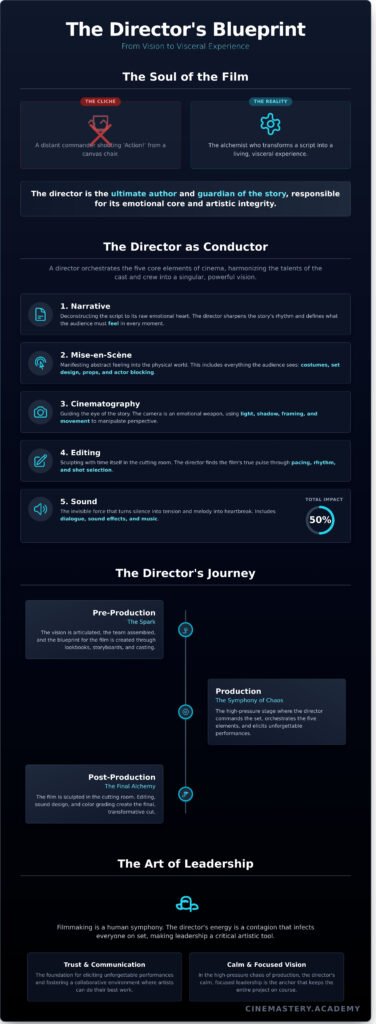
A film set is a symphony of controlled chaos, and you, the director, are its conductor. You don’t need to master every instrument, but you must unite them into a single, transcendent piece. Your baton is your vision, and your orchestra is comprised of the five sacred pillars of cinema: Narrative, Mise-en-Scène, Cinematography, Editing, and Sound. The art of directing is not about personal expertise in all fields; it’s about speaking the language of each artist to harmonize their talents into a singular, visceral experience.
Commanding the Narrative and Mise-en-Scène
The script is your score, but it is you who breathes life into the notes on the page. You will work with the writer to sharpen the story’s rhythm, then deconstruct each scene to its raw emotional heart. What must the audience feel in this moment? This is where The Director’s Vision becomes tangible. Through mise-en-scène, you manifest this feeling into the physical world-shaping everything from the texture of a costume to the precise blocking of actors, transforming an abstract idea into a living, breathing reality.
Guiding the Lens: Directing Cinematography
The camera is not a passive observer; it is the eye of your story, and you dictate its soul. Your collaboration with the Director of Photography (DP) is a sacred pact to create a unique visual language. Every choice-from a claustrophobic close-up to a sweeping wide shot, from the harsh shadows of noir to the soft glow of romance-is an emotional weapon. You guide the lens to manipulate perspective and evoke feeling, painting with light and shadow to serve the narrative’s deepest needs.
Sculpting in Time: Directing the Edit and Sound
The final battle is won in the darkness of the cutting room. Here, alongside your editor, you sculpt with time itself. The raw footage is your clay, and through the alchemy of pacing, rhythm, and shot selection, you find the film’s true pulse. But the image is only half the story. Sound design and music are the invisible forces that create 50% of your film’s impact, turning silence into tension and a simple melody into heartbreak.
These elements are not isolated disciplines; they are interwoven threads in the grand tapestry of your film. See how these five pillars unite in our online filmmaking courses and learn to conduct your own masterpiece.
The Art of Leadership: Commanding the Set and Eliciting Performances
Filmmaking is not a mechanical process; it is a human symphony, and you are its conductor. The director’s chair is the central nervous system of the entire production, the conduit through which vision flows into tangible reality. Your energy, your preparation, your confidence-or lack thereof-is a contagion that will infect every single person on set. In the high-pressure chaos of production, your calm, focused leadership is the only thing that transforms a group of individual artists into a unified force. This is the heart of true directing: navigating the human element to forge harmony.
Working with Actors: The Search for Truth
Your relationship with actors is a sacred trust. You must build a sanctuary where they can be vulnerable, where they can fail spectacularly on the path to finding something true. Never command an emotion. Instead, give your actors a clear objective, a visceral need, a secret. Ask “What does the character want in this moment?” not “How should they feel?” Ignite their inner world with questions and possibilities, and the camera will capture the inferno.
The Language of the Crew
Your crew speaks a dozen different languages-the language of light, of space, of sound. You must be the master translator. Your shot list and storyboards are not just technical documents; they are the blueprints of emotion, your primary tools for communicating the feeling of a scene. Speak to your DP in terms of shadow and mood, your production designer in textures and color psychology. Lead with decisive clarity, but honor the mastery of your collaborators. Their genius will elevate your own.
Ultimately, commanding a set is less about giving orders and more about channeling a collective creative energy. The intricate art of directing is about profound empathy, unshakable preparation, and a radical trust in your team and your own instincts. It’s the moment your vision ceases to be a dream and begins to breathe. To master this delicate dance of art and leadership is to unlock the very soul of cinema. Discover how to hone your voice and lead with power at cinemastery.academy.
The Director’s Journey: From Pre-Production to Final Cut
To command the set, you must first master the journey. Filmmaking is not a single act but a transformative odyssey through three distinct realms. Many believe the magic happens when the camera rolls, but they are mistaken. The brutal, beautiful truth is that 90% of directing is done before a single frame is ever captured. This is the roadmap from a whisper of an idea to a finished film that commands an audience’s attention.
Phase 1: Pre-Production (The Blueprint)
This is where the war is won. Pre-production is the sacred space where you translate the intangible vision in your mind into a concrete, executable plan. It is the most critical phase, where you forge the very soul of your film. Your duties are immense:
- Deconstruct the Narrative: You will live inside the script, breaking it down scene by scene, beat by beat, creating storyboards and meticulous shot lists that define the film’s visual language.
- Cast the Souls: You are searching not for actors, but for the human vessels who will breathe life into your characters. Casting is an art of intuition and profound understanding.
- Build the World: Through location scouting and deep collaboration on production design, you will build the physical and emotional landscape where your story will unfold.
Phase 2: Production (The Battle)
The set is a crucible of pressure, chaos, and fleeting moments of pure genius. Your blueprint is your map, but you must be prepared to navigate the storm. Here, your role shifts from architect to general. You must execute your vision with precision while remaining radically adaptable to the beautiful accidents and harsh realities of the shoot. You are the guardian of time, energy, and morale, and at the end of each grueling day, you will review dailies-the first raw glimpses of the story taking form.
Phase 3: Post-Production (The Discovery)
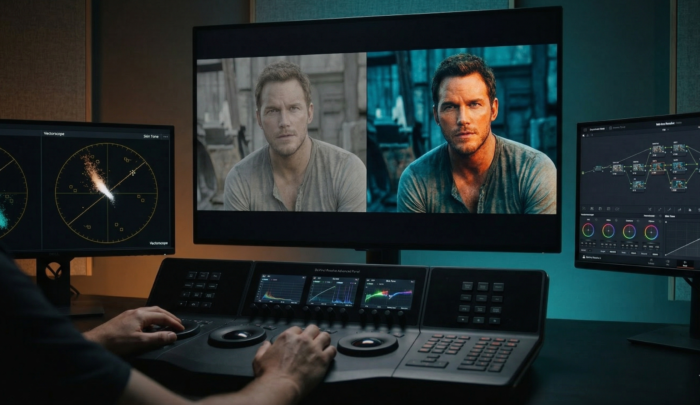
The battle is over, but the final creation has just begun. In the quiet of the edit suite, you and your editor will sift through the raw chaos to find the film’s true rhythm and emotional core. This is the final rewrite. You will oversee the alchemy of sound design, the emotional power of the musical score, and the visceral impact of color grading. The last, and perhaps hardest, part of your journey is knowing when to let go-to recognize when the film is truly finished and speaks for itself.
This path from blueprint to final cut is the heart of the craft. Ready to start your journey? Explore the Cinemastery curriculum.
From Vision to Visceral Reality: Your Director’s Chair Awaits
The director’s chair is more than a seat; it is the epicenter of a creative universe, the crucible where raw ideas are transmuted into cinematic gold. It is where a singular vision is forged, where leadership transforms chaos into collaboration, and where the five core elements of cinema are orchestrated into a symphony of visceral emotion. True directing is the art of breathing life into a story, manipulating reality to reveal a deeper truth that resonates long after the credits roll.
But theory is a silent film without a projector. The knowledge you’ve gained is a map; now you must embark on the journey. Stop dreaming and start creating. At Cinemastery Academy, you will learn from an instructor dedicated to the art of the unique audiovisual experience. Our curriculum, built on the five core pillars of masterful filmmaking, goes beyond technique to help you discover your unique directorial voice. Forge your signature style at Cinemastery Academy.
The world is waiting for the stories only you can tell.
Frequently Asked Questions
What skills does a film director need most?
A director is the conductor of chaos, the ultimate visionary. Mastery begins with an unshakeable artistic vision-the ability to see the finished film in your mind’s eye. This is followed by decisive leadership to guide your cast and crew through the storm of production. You must be a master communicator, translating the abstract language of emotion into concrete actions, camera angles, and performances. These three pillars-vision, leadership, and communication-are the foundation of your command on set.
Do you need to go to film school to become a director?
Film school can provide a structured path and a network, but it is not the crucible where a director is forged. The real education happens on set, in the editor’s suite, and in the relentless pursuit of your own voice. The greatest filmmakers were students of cinema itself, not just of a curriculum. Your passion, your unique perspective, and your unwavering commitment to creating powerful images are your true credentials. The camera is your classroom; start shooting.
What is the difference between a director and a producer?
The director is the film’s artistic soul; the producer is its logistical spine. As the director, you are responsible for the creative vision-every frame, every performance, every sound that shapes the audience’s visceral experience. The producer is the architect of the possible, securing the funding, managing the budget, and assembling the resources needed to bring your vision to life. One commands the story, the other commands the machine that tells it. Both are essential for transforming chaos into art.
How do directors find scripts and get hired for projects?
You don’t wait for opportunity; you create it. Forge your path by first creating a powerful showreel of short films that screams your unique style. This is your calling card. Network relentlessly, not just with producers, but with writers whose voice resonates with your own. The most powerful tool for getting hired for any directing project is a body of work that is impossible to ignore. Prove you can manipulate reality on screen, and the scripts will find you.
How can I start directing with no experience or budget?
The fire to create is your only true requirement. Your smartphone is a cinema camera. Your apartment is a location. Your friends are your actors. Write a potent, one-page script that can be shot in a single day. Focus on the core pillars: a compelling narrative and evocative sound design. The most transformative films are born from constraints. Stop waiting for a budget and start creating for the only audience that matters at first: yourself. Make something that gives you chills.
What are some common mistakes first-time directors make?
The cardinal sin is a weak or wavering vision. If you don’t know precisely what you want, you will lead your crew into mediocrity. Another fatal flaw is ignoring sound, forgetting that it constitutes 50% of the cinematic experience. Finally, many first-timers micromanage their artists instead of leading them, stifling the collaborative magic. True directing is about having the confidence to guide brilliant people, not control them. Trust your vision and trust your team.