
THE CINEMASTERY JOURNAL
The Art of the 2 Shot: A Director’s Guide to Framing Relationships
14 February 2026 · 14 min read
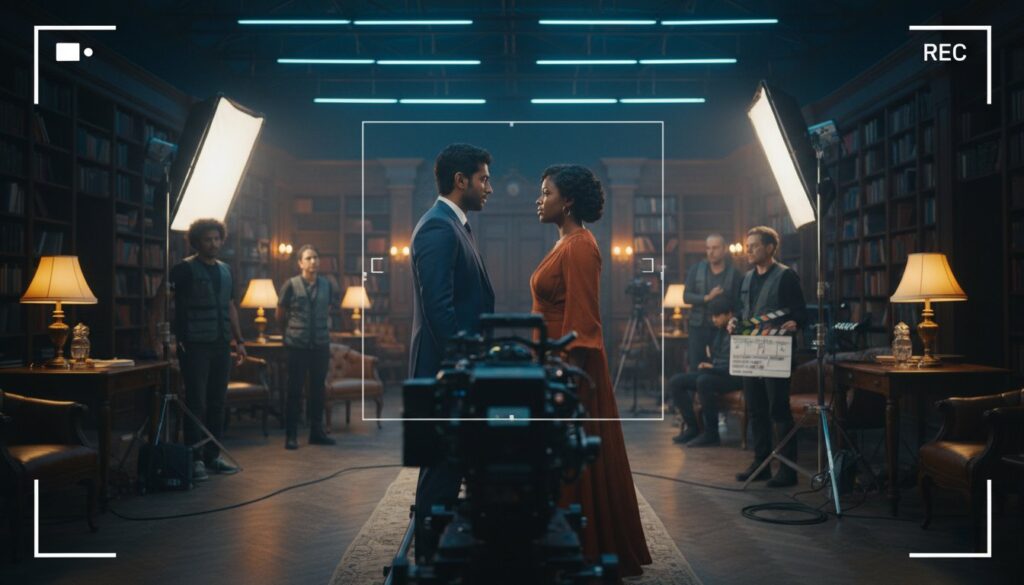
Are your dialogue scenes drowning in an endless, predictable sea of shot/reverse shot? Do they feel visually flat, devoid of the emotional subtext simmering just beneath the surface of the words? You are not alone. It’s a trap that suffocates cinematic potential. But there is a more powerful, more elegant way to manipulate reality and capture the raw truth of human connection. We’re talking about the art of the 2 shot camera shot-a single, deliberate frame that can hold the entire, volatile universe of a relationship.
This isn’t just about placing two actors together; it’s about orchestrating a visual symphony where proximity is poetry and framing is fate. It’s the director’s secret weapon for forging visceral tension, revealing fragile intimacy, or exposing a silent power struggle without a single line of clumsy exposition. In this essential guide, you will move beyond mere coverage. You will learn to compose with intent, to master the language of the 2 shot, and to transform your scenes from static conversations into dynamic, unforgettable moments of cinematic art.
Key Takeaways
- Move beyond the technical definition and learn to wield the 2 shot as the visual stage for connection, conflict, and unspoken intimacy.
- Discover how to deliberately manipulate distance, angle, and on-screen balance to control the emotional subtext of every 2 shot camera shot.
- Transform static frames into a visceral dance by choreographing character movement to reveal shifting power dynamics and evolving relationships.
- Deconstruct iconic 2 shots from cinematic masters to understand their hidden language and infuse your own work with the same narrative power.
Table of Contents
- What is a 2 Shot? The Soul of Cinematic Connection
- The Language of Framing: Composing a Powerful 2 Shot
- Blocking and Movement: Choreographing the On-Screen Relationship
- Iconic 2 Shots in Cinema: Learning From the Masters
What is a 2 Shot? The Soul of Cinematic Connection
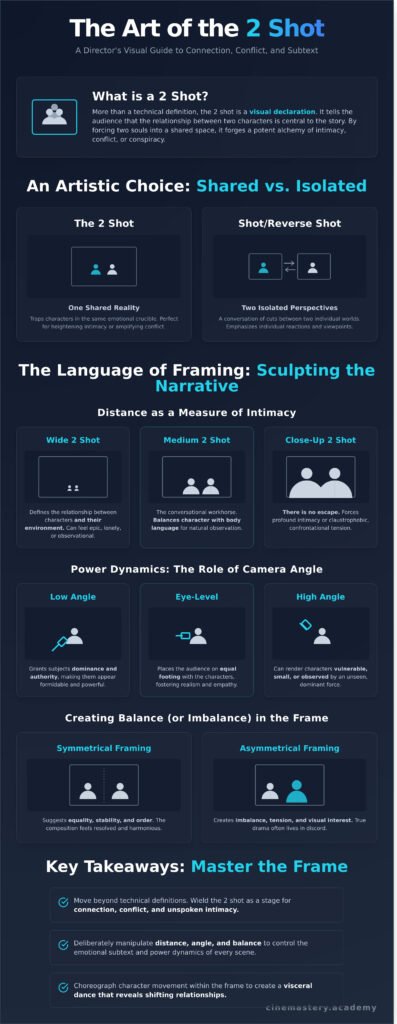
Forget the dry, technical manuals. The 2 shot camera shot is not merely a composition with two people in it. It is a declaration. It is the visual stage where human connection is forged, tested, and shattered. In the silent language of cinema, this single frame speaks volumes, establishing the visceral reality of a shared world long before a single word of dialogue is uttered. While a single shot isolates a character in their own universe, the 2 shot forces two souls into a shared space, creating a potent alchemy of intimacy, conflict, or conspiracy. It tells your audience: these two matter, together.
Beyond the Technical: A Frame for Two Souls
While the technical answer to what a 2 shot is-a single frame featuring two subjects-is simple, its artistic function is profound. Its true power lies in establishing proximity and relationship. By placing two characters side-by-side, you force the audience to compare and contrast them instantly. You’re not just showing two people; you’re revealing the invisible energy that flows, or fails to flow, between them in that shared space.
Why the 2 Shot is a Storyteller’s Most Vital Tool
This shot is the bedrock of on-screen chemistry and the foundation of powerful blocking. It’s a storyteller’s most vital tool because it builds a world where characters must coexist, creating a shared reality for the audience to inhabit. More importantly, it allows you to capture the raw, unfiltered truth of performance. Instead of cutting away, you hold the frame and let the audience witness every subtle glance, every flinch, every silent reaction in real-time. This is where the magic happens, where a consistent emotional energy is built and sustained between two performers.
The 2 Shot vs. Shot/Reverse Shot: A Crucial Artistic Choice
Choosing a 2 shot over a shot/reverse shot sequence is a fundamental artistic decision. Shot/reverse shot is a conversation of isolated perspectives, cutting between two individual worlds. The 2 shot camera shot, however, is a statement of unity, tension, or objective observation. Use it to heighten intimacy in a confession, trapping both the speaker and the listener in the same emotional crucible. Conversely, use it to amplify conflict, showing two adversaries locked in a visual power struggle. The choice is yours: do you want to show two separate perspectives, or one shared, inescapable reality?
The Language of Framing: Composing a Powerful 2 Shot
Forget the rules of basic coverage. To compose a powerful 2 shot is to think like a painter. Your frame is a canvas, and every choice-every subtle shift in distance, angle, and balance-is a brushstroke that defines the emotional truth of the relationship on screen. This is not about simply pointing the camera at two people; it is about sculpting the space between them to tell a story. You are manipulating reality to create a visceral, undeniable feeling in your audience. Every 2 shot camera shot is a statement about connection or division, power or vulnerability.
Distance as a Measure of Intimacy
The physical space you place between the camera and your subjects dictates the psychological space you create for the audience. It is the primary tool for controlling emotional proximity. By understanding the full spectrum of essential shot types, you can select the perfect distance to convey the exact feeling a scene demands.
- Wide 2 Shot: This is the shot of context and scale. It establishes your characters within a world, defining their relationship not just to each other, but to their environment. It can feel epic, lonely, or observational.
- Medium 2 Shot: The conversational workhorse. This framing balances character with body language, creating a sense of natural observation. It is the neutral ground from which most relationships are explored.
- Close-up 2 Shot: There is no escape here. This forces two faces into a shared frame, creating either a profound sense of intimacy and shared secrets or a claustrophobic, confrontational tension.
Power Dynamics: The Role of Camera Height and Angle
Your camera’s vertical position is a declaration of power. An eye-level shot places the audience on equal footing with the characters, fostering a feeling of realism and empathy. But dare to shift that axis, and you manipulate the entire dynamic. A low-angle shot grants your subjects dominance and authority, making them loom large and formidable. Conversely, a high-angle shot can render them vulnerable, small, or observed by an unseen force, trapping them within the frame.
Creating Balance (or Imbalance) in the Frame
Composition is the art of turning chaos into harmony-or deliberate discord. A symmetrically framed 2 shot camera shot, with both characters balanced perfectly, suggests equality, stability, and order. It feels resolved. But true drama often lives in imbalance. Asymmetrical framing creates immediate visual tension, suggesting an unequal relationship or an unresolved conflict. Use negative space to scream what isn’t said; a vast, empty gap between two characters can convey more emotional distance than any line of dialogue ever could.
Blocking and Movement: Choreographing the On-Screen Relationship
A 2 shot camera shot is not a static portrait; it is a living, breathing stage where the silent war of relationships is won and lost. To treat it as a mere framing device is to ignore its true power. The space between two characters is a battlefield of emotion, and their movement within it is a visceral dance choreographed by you, the director. Every step, turn, and gesture is a line of unspoken dialogue, revealing the subtext that words cannot touch.
Using Blocking to Reveal Subtext
Blocking is the soul of your scene made visible. When a character invades another’s space, the power dynamic shifts instantly, creating tension or intimacy. When they turn their back, it’s a rejection more potent than any insult. A character entering the frame can disrupt a fragile harmony, just as one leaving it can create a devastating void. This is where you stop being a technician and become a master of emotional manipulation, guiding the audience’s heart with every move.
The Static vs. The Moving Camera
The energy of your camera must match the emotional core of your scene. There is no one right answer, only the one that serves the story with the most impact. Do not be lazy; make a deliberate choice.
- The Static Shot: Locked on a tripod, the camera becomes an objective observer. It creates a window for the audience, allowing the raw power of the performances to command the frame with an almost theatrical intensity.
- The Moving Camera: A handheld shot injects chaos and raw, documentary-style urgency. A smooth dolly or Steadicam move creates an elegant, flowing connection, binding the characters and the audience in a shared journey.
The ‘Dirty’ 2 Shot: Adding Depth and Perspective
To “dirty up” a shot means to intentionally include a piece of the foreground character-a shoulder, the side of a head-in the frame. This is not a mistake; it’s a powerful tool. The dirty 2 shot camera shot breaks the clean, observational barrier and forces the audience into a more subjective, personal space. It makes us feel like we are right there, peering over a shoulder, privy to an intense confrontation or an intimate confession. It’s a technique that screams perspective and immersion.
Ready to master the dance and command every frame? Explore our Cinematography course.
Iconic 2 Shots in Cinema: Learning From the Masters
Theory is the map, but watching the masters at work is the journey itself. To truly grasp the visceral power of the 2 shot, we must deconstruct the moments that are seared into our collective cinematic memory. These are not just beautiful frames; they are masterclasses in visual storytelling, where composition becomes a direct channel to theme and character.
‘The Godfather’ (1972): A Conversation of Power
Witness the alchemy of Gordon Willis’s cinematography in the opening scene. We are not given a simple, objective view. Instead, we are placed into a dirty 2 shot over Vito Corleone’s shoulder. His form dominates the foreground, a shadowy monolith of power, while the undertaker Bonasera pleads in the sliver of space that remains. The frame forces you into Bonasera’s supplicant position, making you feel his desperation. The power dynamic isn’t just spoken; it’s an undeniable visual fact before a single deal is struck.
‘Before Sunrise’ (1995): The Walk-and-Talk as Intimacy
Richard Linklater transforms the 2 shot from a static tableau into a flowing, breathing entity. The film’s signature is the moving 2 shot, which holds Jesse and Céline together as they drift through Vienna. This shared frame creates a sacred, intimate bubble around them, separating them from the world. Their constant physical proximity, enforced by the camera, makes their burgeoning intellectual and romantic connection feel tangible. The shot isn’t just capturing their conversation; it is their connection, visualized.
‘The Dark Knight’ (2008): Conflict in a Shared Frame
A 2 shot can also be a cage. In the iconic interrogation scene, Christopher Nolan traps two opposing ideologies in a single, stark frame. The composition is often balanced, almost symmetrical, presenting Batman and the Joker as equal but opposite forces-two sides of the same corrupt coin. This perfect 2 shot camera shot contains the uncontainable: the Joker’s anarchic chaos and Batman’s rigid order. The tension is electric because the frame refuses to let either ideology escape or dominate, forcing a confrontation that is purely philosophical.
From a quiet request for justice to a walk that changes two lives, the 2 shot is a foundational tool of cinematic language. It is your key to sculpting relationships, defining power, and giving emotional weight to the space between two souls. Now, it’s your turn to wield it. To go beyond coverage and create moments that matter, explore the deeper principles of visual storytelling at cinemastery.academy.
Beyond the Frame: Mastering the Language of Connection
The two shot is never just a technical choice; it is the visual soul of a relationship. You’ve seen how framing dictates power, how blocking choreographs connection, and how the space between characters tells a story words cannot. This understanding transforms the 2 shot camera shot from a simple technique into a profound storytelling weapon, allowing you to create visceral, unforgettable emotional tension. In an age where all films threaten to look the same, this is how you stand apart.
Are you ready to command the entire arsenal of cinematic language? Forge your unique cinematic voice. Explore the Cinematography Masterclass. Taught by award-winning instructor Nick Kioroglou, this is where you will master the five core elements of filmmaking. It is your opportunity to stop imitating and start creating-to build a unique audiovisual experience that is undeniably yours.
The screen is your canvas. Dare to create something that lasts.
The 2 Shot: FAQ
What is the difference between a 2 shot and a medium 2 shot?
Think of it as the difference between observing a relationship and feeling it. A 2 shot is any frame holding two subjects, but a medium 2 shot is a specific, powerful choice. By framing your characters from the waist up, you pull the audience closer, forcing them to engage with the subtle shifts in body language and expression. It’s the realm of intimacy, subtext, and the unspoken truths that pass between two souls, turning a simple observation into a shared experience.
When should you actively avoid using a 2 shot in a scene?
You must shatter the 2 shot when the narrative demands isolation. To convey a character’s profound loneliness, a secret they hold, or a moment of singular, internal crisis, you must frame them alone. Using a 2 shot in these moments would betray their subjective reality. Use single shots to emphasize a psychological break between characters or to force the audience into one specific point of view, making them feel the weight of solitude or the shock of betrayal.
How does your choice of lens (wide vs. telephoto) affect a 2 shot?
Your lens is not a tool; it’s the eye of your story. A wide lens will place your duo within a larger world, making the environment a third character that can either unite or overwhelm them. It creates a sense of shared space and context. A telephoto lens does the opposite: it compresses space, obliterates the background, and isolates your characters. This creates a forced intimacy, a visual pressure cooker where the only thing that matters is their connection or conflict.
Can a 2 shot be effectively used in a high-energy action sequence?
Absolutely. In the beautiful chaos of an action scene, the 2 shot is your anchor for emotional stakes. It’s the visual glue that shows teamwork, rivalry, or shared peril. Think of two heroes fighting back-to-back against impossible odds, or a pilot and co-pilot navigating a storm. The 2 shot transforms kinetic energy into a shared human struggle, ensuring the audience cares not just about the spectacle, but about the survival of the relationship at its core.
What is a ‘cowboy’ 2 shot and when is it used?
The cowboy shot, framing from mid-thigh up, is pure cinematic swagger. It was born to capture a gunslinger’s holster, and it carries that legacy of power and readiness. A cowboy 2 shot is a confrontation waiting to happen. It’s the perfect frame for standoffs, power negotiations, or moments of intense unspoken challenge. It gives your characters a mythic presence, grounding their emotional conflict with a powerful, physical stance that commands the frame and builds immense tension.
How do I light a 2 shot effectively to create mood?
Lighting a 2 shot is painting the soul of a relationship with shadow and light. Don’t just illuminate; define. Create conflict with high-contrast lighting, casting one character in shadow to suggest deceit or internal turmoil. Forge intimacy by wrapping both subjects in a single, soft key light, visually unifying them. Every shadow you cast and every highlight you place on a 2 shot camera shot is a narrative choice that tells the audience precisely how to feel about their bond.